8 Nationwide Commercial Repair Contractors for Multi-Site Property Owners
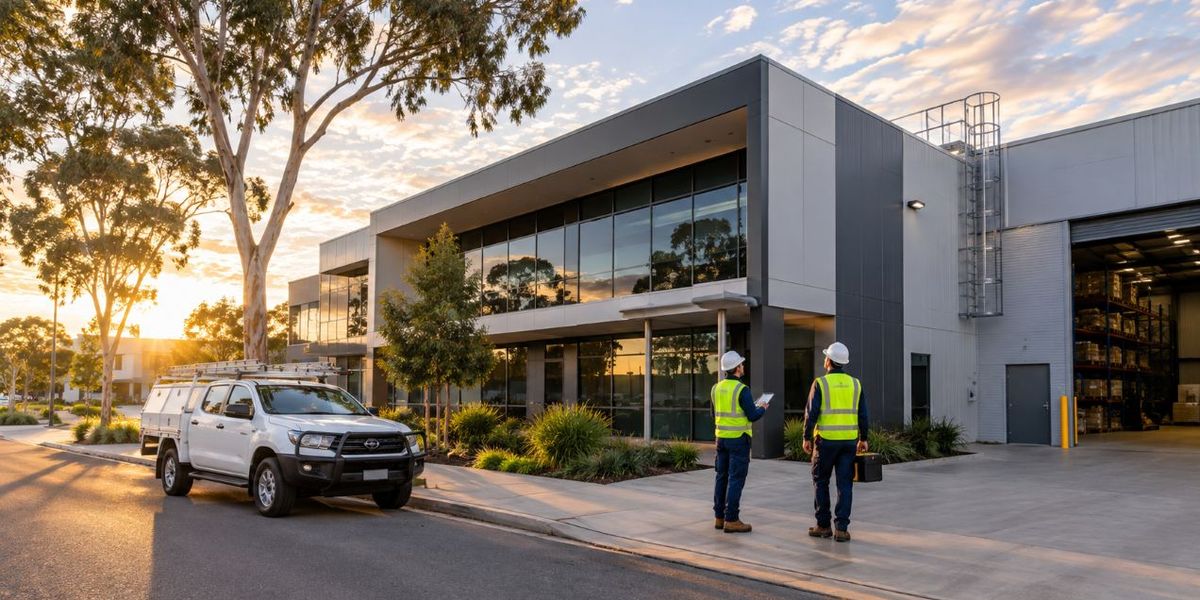
A leak in one warehouse is a job. The same leak across eight sites, with eight contractors and eight invoicing styles, is a management problem.
Local tradies can be excellent. They fall down when you run offices, retail and industrial space in more than one state. Response times drift. Photos arrive late. After-hours cover is a lucky dip. By the time someone asks why Perth costs twice what Parramatta costs, you’re rebuilding the story from emails.
If you own or manage those sites, you’re already doing property management: looking after the asset, coordinating repairs, and staying accountable for conditions. A national contractor is meant to make that easier. Some do. Some just give you one phone number and the same mess, plus a monthly report.
You want comparable crews, a written response time, and a closed job you don’t have to chase.
1. Commercial Building Repairs
If the job is a defect, not a facilities strategy, start with a repair contractor. Commercial Building Repairs is a nationwide property maintenance business for commercial work, with building and plumbing capability and a simple brief: get it fixed.
That’s the call most asset managers actually make. A damaged entry. A leak. A failed fitting. A tenancy that can’t wait for the next planned cycle.
Use them when you need trades on site, not a 40-page pack covering cleaning and security you already buy elsewhere.
2. Jim’s Handyman
Jim’s is the franchise model most people already know. That’s the advantage, and the catch.
The group has been going for more than 30 years, books through 131 546, and covers commercial building maintenance as well as residential work. Think carpentry, plastering, tiling, shopfitting, interior and exterior repairs, plus preventative programs. For a retail strip in three states, a national number with local attendance is handy. You don’t have to stand up a new vendor in every council area.
You’re not getting one employed crew from Darwin to Hobart. You’re getting local operators under one brand. That works for smaller repairs and make-good items. It is weaker if you need the same method, the same reporting and the same after-hours behaviour at every site. Ask how jobs are allocated, and who owns the defect if the franchisee is already booked.
3. AJ Building and Restoration
Storm, fire and water damage don’t wait for the maintenance calendar.
AJ Building and Restoration is an insurance restoration and make-safe contractor with offices in Sydney, Melbourne and Brisbane. They run about 40 staff plus a large contractor bench across Queensland, New South Wales and Victoria. Work includes 24/7 emergency response, make-safe, fire and water restoration, mould, then follow-on building repairs: carpentry, plumbing, electrical and roofing.
They also work the insurance file. Scopes, photos, direct contact with the insurer.
That’s the fit if you hold sites on the eastern seaboard and need one builder who can board up, dry out and reinstate without a 2am briefing. They’re not a full national facilities contractor. Their own site still talks about expansion rather than a finished Australia-wide map. Don’t pretend otherwise in the tender.
4. Reconstruct TM
Reconstruct TM is an insurance builder first. Fire, water and mould claims, strata repairs and commercial projects sit in the same shop. That matters when a damaged site is both a claim and a tenant problem.
They’re licensed in multiple states, including Victoria, Queensland, New South Wales and Tasmania. The offer is turnkey: first inspection through to completed reinstatement.
Keep them for the ugly jobs. Occupied reinstatement. Strata politics. Claims that stall because the builder can’t talk to the assessor. They’re the wrong everyday panel for 40 minor defects a month.
5. Programmed Property Services
Programmed is the scale option.
Founded in Victoria in 1951, now part of PERSOL, it operates from more than 100 locations across Australia and New Zealand. Property and building maintenance here means commercial painting, general maintenance, building projects, essential services, grounds and urban work. Not just a carpenter in a van.
They already work in education, healthcare, strata, retail, government and commercial portfolios. If you need a national repaint program, a minor-works pipeline, or one contractor who can take a capital job in one state and a maintenance ticket in another, they’ve got the systems.
You’ll also spend time on account management and onboarding. Worth it on a big panel. Clumsy if you only need after-hours leak response at six shopfronts. Put them on planned and project work. Keep a sharper reactive contractor beside them.
6. ISS Australia
ISS is the self-performed facilities option, not a broker with a van network.
ISS Australia runs integrated facility services across Australia and New Zealand. Globally the group is about 125 years old, with more than 325,000 people worldwide and around 17,000 locally. The local pitch is one team on site: technical maintenance, building fabric, cleaning, security, workplace support and 24/7 technical assistance, tied together with CMMS and asset-management systems.
They sell hard and soft services as one contract, and they make a point of using ISS employees rather than a stack of subcontractors. That matters if you’ve been burned by margin-on-margin and nobody owning the defect.
Use them when the portfolio is complex, regulated or high-traffic, and you want the same standard at every site. They’re a poor fit if you only need a carpenter after a shopfront smash. Don’t buy catering and concierge to solve a leak.
7. ServiceFM
ServiceFM sits in the same facilities space, with a longer cleaning heritage and a national claim that is actually specific: operations in every major capital, a workforce of about 2,000, and work in metro, regional, rural and remote sites.
Hard and soft services sit together. Planned asset maintenance, cleaning, test and tag, landscaping, security, pest, plus a subcontracted trade network behind the ServiceFM360 platform.
For owners with sites outside the CBDs, test the regional and remote line. Plenty of “national” contractors fade once you leave the ring road.
They’re a fit when you want one facilities partner and work-order visibility across the lot. They’re a poor fit if cleaning and security are already locked in and you only need a building-repair contractor. Don’t pay for a full FM wrapper to get a carpenter.
8. Ventia
Ventia is one of Australia’s largest essential-services contractors. The work is mostly the unglamorous bit: maintaining, operating and repairing assets that already exist, under long-term contracts across Australia and New Zealand.
Property and workplace services sit inside that. Building maintenance, repairs, cleaning and asset work for government, defence, transport, resources and social infrastructure. They are not a shopfront make-safe builder. They are the firm you look at when the portfolio behaves like infrastructure: many sites, strict SLAs, and no appetite for a different contractor in every state.
The trade-off is size. You’ll get process, reporting and a long onboarding. You may not get a two-hour carpenter for a broken door. Put them on the panel if your sites need that government-style maintenance machine. Keep a reactive repair contractor for the everyday defects.
How to shortlist without a beauty parade
Run a small live test before you sign anything national. Give two contractors the same defect type in two states. Time the first attendance. Check the make-safe. Read the close-out notes. See whether the invoice matches the quote.
Then check the boring controls:
- Licences in each state you care about
- WHS method for occupied sites
- An after-hours number a person answers
- Whether they self-perform or only broker labour
Most multi-site owners end up with a split panel, and they should. A reactive repair firm for defects. A restoration builder for insured events. A maintenance contractor for planned work. A specialist for national fabric programs.
That mix costs less than pretending one company can do all of it well. If the sites are also an investment, not just an operating headache, the repair panel is part of looking after the asset. That’s the unglamorous side of commercial property ownership, and it sits alongside the rest of running and scaling an Australian operation.
Jasper Farrow
Author