How Can New Ventures Maintain Healthy Cash Flow Month Over Month?

How Can New Ventures Maintain Healthy Cash Flow Month Over Month?
It is so exciting to start a new business. You have great ambitions, new ideas, and the motivation to get things going.
The reality that catches most entrepreneurs off guard, however, is that despite having a profitable business, failure may strike as soon as they run out of cash.
It is not about the amount of money you are making on paper; it is about having enough money in the bank to pay your bills as they fall due.
Cash flow is the lifeblood of any new venture. Startups and young companies often have very slim margins, whereas established ones may have reserves to carry them through dry spells. A single late payment from a customer or an unforeseen cost can disrupt the entire balance.
The good news? It is not rocket science to maintain healthy cash flow. It simply requires attention, planning, and the clever strategies we will discuss below.
Getting to Know the Cash Flow Challenge
Let us understand the problem before we rush into solutions.
Problems with cash flow are normally caused by timing issues: you are spending cash before it comes in. You may have entered into a big contract, which looks good on your books, but if your client takes 60 days to pay and your suppliers demand payment in 30 days, you have a problem.
This challenges new ventures more than anyone else. You are accumulating stock, investing in machinery, hiring employees, and spending money on marketing, yet you have not built a steady flow of income.
It is like attempting to fill a bucket that has holes. You need to fill those holes to ensure more money flows in than flows out, month after month.
Make a Realistic Cash Flow Forecast
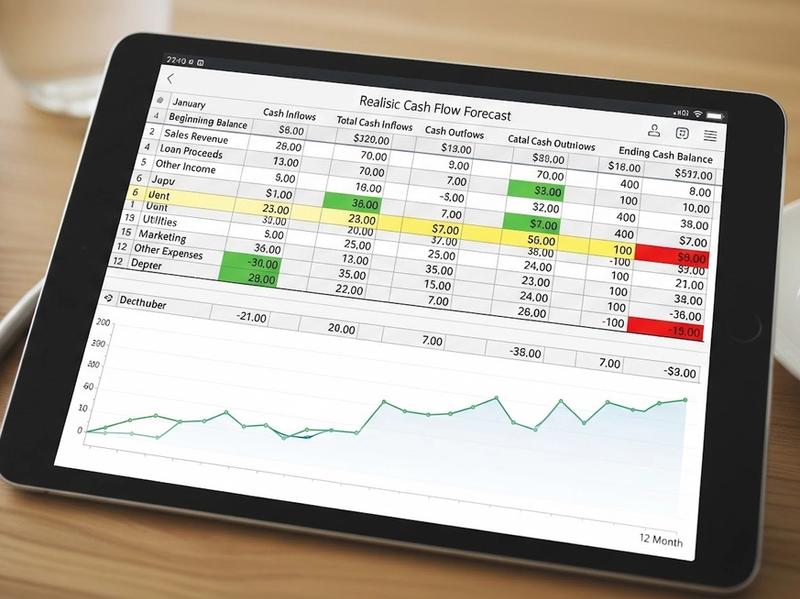
Healthy cash flow is based on the knowledge of what is forthcoming.
You require a cash flow forecast—no, not a budget, but a week-by-week or month-by-month prediction of when money will actually enter your bank account and when it will leave.
Here is how to start:
Indicate all your projected income. Be conservative here. If a client is used to paying within 45 days, do not assume they will start paying within 30 days.
Then, list all your expenses: rent, payroll, supplies, loan payments, everything. Irregular costs, such as quarterly tax payments or annual insurance premiums, should also be included.
This practice may seem tedious, yet it is very eye-opening. You will notice when you are about to run out of cash weeks or months before it occurs, giving you time to do something about it.
Assess and revise your forecast regularly—at least monthly in a new venture. Hiring a business financial planner can contribute to the development of a sound forecasting model. This allows you to consider all potential situations and ensures you have enough funds to avoid getting caught by unexpected cash demands, which are often predictable anyway.
Speed Up Your Receivables
One of the quickest methods of increasing cash flow is accelerating the receipt of payments.
Every day an invoice remains unpaid is a day you cannot use that money for your business.
Invoice promptly. Send the invoice the moment you deliver a product or finish a service. Do not wait until the end of the month.
Consider offering small discounts for early payment—for example, a 2% discount for payment within 10 days. It pays to have money in hand sooner.
Make paying easy. Accept multiple payment options, such as credit cards and electronic payments. Yes, you will pay processing fees, but immediate cash is usually better than saving a few percentage points while waiting 30 or 60 days.
Keep Track of Who Owes You Money
Debtor management is vital for ensuring stable cash flow. This involves keeping track of those who owe you cash and pursuing them methodically.
Send pleasant reminders a few days before the due date, and do not hesitate to call right after invoices are overdue.
The majority of late payments are not personal—clients often just forget or get busy. An amicable phone call is likely to attract instant payment.
Get Improved Payment Terms
Your terms of payment should not be fixed. Almost everything is negotiable with both customers and suppliers.
Attempt to reduce the payment terms with customers. If you have been giving net-60 days, find out whether you can change it to net-30.
In the case of larger projects, consider milestone-based billing where you receive money as you finish stages of the work, rather than waiting until the end of the project.
For suppliers, negotiate extended payment periods. If they want net-30, ask for net-45 or 60. The majority of suppliers would prefer a stable customer who pays a little later than to lose your business entirely.
You may be amazed by how flexible they can be, particularly when you have built a positive payment history.
Manage Your Costs Without Choking Growth
It is a balancing act to take costs down; easier said than done. You cannot starve your business to success. The purpose is to remove waste, not opportunity.
Begin analyzing your spending by dividing costs into necessary and luxury.
Essential expenses keep the lights on and generate revenue. Discretionary expenses are luxuries that can be adjusted. This does not mean cutting every discretionary expenditure—sometimes those extras keep the economy growing—but understanding the distinction allows you to make informed choices when the bank account is empty.
Where feasible, convert fixed costs to variable costs. Could a contractor replace a full-time employee? A coworking space might be a better place to start than renting expensive private office space.
Variable costs increase in tandem with your business, making it easier to enjoy positive cash flow during slower times.
Build a Cash Reserve

I realize what you are thinking: "If I had extra cash lying around, I wouldn't be worried about cash flow!"
Fair point. However, creating even a small reserve should be your first priority.
Attempt to save a portion of all earnings—even half a percent. That is equivalent to paying yourself, or rather paying your future, for when things take a downturn.
In the long term, intend to develop a reserve of one to three months of operating costs.
This cushion is not only for emergencies. It also allows you to seize opportunities, such as a vendor offering a bulk discount or the chance to hire a dream employee you might otherwise have missed.
Monitor Your Metrics Weekly
You cannot control something that you are not measuring. Maintain a schedule of verifying major cash flow indicators weekly, not just when preparing monthly financial reports.
Key metrics to track:
- Cash runway: The period, in months, you can continue at your present burn rate without running out of money.
- Days Sales Outstanding (DSO): The average number of days it takes to collect payment after a sale.
- Quick ratio: Do you have enough liquid assets to meet short-term obligations?
These figures provide a narrative of your business's financial performance. As soon as they start drifting in the wrong direction, you will realize it is time to act before a small problem turns into a crisis. Working with an experienced small business accountant can help you set up the right tracking systems from day one, so these numbers become a clear roadmap rather than a source of stress.
Cash Flow is Not a Destination, It is a Habit
Maintaining cash flow is not something you do once and then forget about.
It is a continuous process that requires attention, discipline, and adaptation. Not all businesses with the highest revenue survive; the ones that survive are those that spend money wisely, predict potential issues, and have the financial room to weather storms as well as take chances.
These strategies are necessary, and you should start applying them today, even if you are not currently experiencing cash flow issues. It is always advisable to repair your roof when the sun is shining.
Establish good cash flow habits now, and you will build a foundation for long-term growth in the future.
Jasper Farrow
Author